
The column by Paul Schmidt-Troschke marks an exclusive World Cup partnership with The Guadalajara Post and the Monterrey Daily Post in which Schmidt-Troschke and the ‘World Cup etc’ international reporting team will be contributing exclusive World Cup coverage for both websites. ‘World Cup etc’ can be found across all good podcast providers.
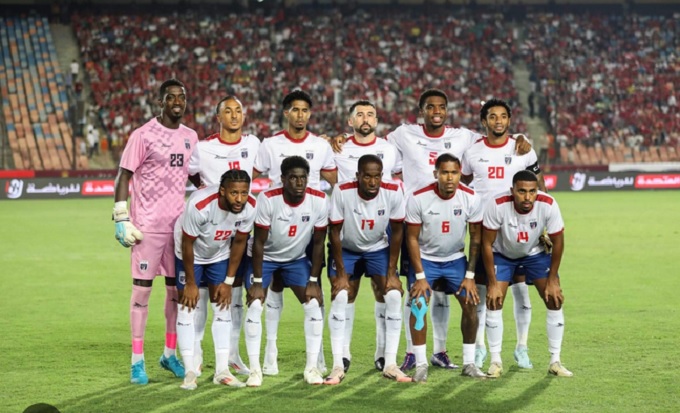
The archipelago of Cape Verde has recently achieved numerous unprecedented and monumental sporting milestones by not only officially qualifying for the 2026 FIFA World Cup for the first time ever after decisively topping their African qualifying group. This incredible story of triumphs of the national football team has sparked euphoric celebrations across the islands and within the vast global diaspora, proving that extraordinary determination can overcome significant geographic and demographic limitations. To truly understand the significance of this achievement, one must view it through the broader lens of the nation’s profound past, because the resilience currently displayed on the global football stage is deeply rooted in a complex historical struggle for survival and independence.
Located strategically in the central Atlantic Ocean, the islands of Cape Verde were entirely uninhabited until Portuguese explorers discovered and subsequently colonized the archipelago in the middle of the fifteenth century. Because of its highly advantageous geographical position off the western coast of Africa, the archipelago quickly transformed into a crucial, highly profitable transatlantic hub for the devastating global slave trade, which consequently shaped the foundational demographic and cultural development of the newly established society. Over several centuries, the continuous mixing of European settlers and enslaved Africans gradually gave birth to a uniquely resilient Creole culture, complete with its own distinct language, vibrant musical traditions, and rich social customs.
However, as the transatlantic slave trade eventually declined during the nineteenth century, the islands suffered through an extended period of severe economic depression, which was consistently exacerbated by harsh ecological conditions, including frequent, devastating droughts and subsequent famines. These realities forced countless Cape Verdeans to seek better opportunities abroad, ultimately creating a massive international diaspora that currently outnumbers the domestic population of 525.000 people living on the actual islands.
Throughout the twentieth century, a powerful movement for national liberation slowly gained momentum under the leadership of Amílcar Cabral, whose tireless political efforts eventually culminated in Cape Verde achieving full independence from Portugal in 1975. Initially established as a one-party state closely aligned with Guinea-Bissau, the nation transitioned into a robust multiparty democracy by the early 1990s, completely avoiding the violent conflicts that unfortunately plagued so many other newly independent nations. Today, Cape Verde stands proudly as one of the most politically stable and democratically advanced countries on the African continent.
The beautiful game of football was initially introduced to the islands by the Portuguese during the colonial era, quickly becoming an integral part of the local cultural fabric. The sport’s formal organization began to take shape when the Federação Cabo-verdiana de Futebol was officially established in 1982, eventually gaining full membership in FIFA a few years later in 1986. Domestic football within the country is uniquely organized across the various islands, featuring distinct regional leagues where local champions ultimately compete in a centralized national championship to determine the eventual winner of the archipelago.

However, because domestic clubs continuously face significant financial limitations and lack access to elite training infrastructure, the national team heavily depends on the vast Cape Verdean diaspora residing throughout Europe. By scouting and successfully recruiting talented players with Cape Verdean heritage from prominent European nations such as Portugal, France, and the Netherlands, the national federation has managed to assemble a highly competitive squad. This strategic reliance on external academies has allowed the national team nicknamed the “Blue Sharks” to steadily improve, transforming a modest island nation into a genuinely formidable opponent on the international stage.
Finally, everything was set for Cabo Verde to show the world what they had to bring onto the pitch, and there is even no better way in which the island nation did exactly that, by winning its first point in its first world cup game against no other than current reigning European Champions Spain in a 0-0 draw. And Cabo Verdean goalkeeper Vozinha rose to unprecedented global fame overnight, multiplying his Instagram followership of 50.000 people at the start of the tournament to now 17.1 million, a multiple of more than 300 times in the matter of days.
Uruguay should be the next traditional football powerhouse to fall victim to the rigorous game strategy of coach Pedro Leitão Brito nicknamed Bubista and the flawless execution of the strategy on the pitch by his players. A 2 all draw against the two time world cup champion suddenly made it possible for Cabo Verde to reach the knockout stages, a scenario which was at best a dream. But in the last group stage game against Saudi Arabia Cabo Verde did what Cabo Verde does best, grinding their opponent down to a draw.
This spectacular performance brought the first time world cup participant not only a third, but the second spot in its group just below Spain and above Uruguay and Saudi Arabia. Now facing Argentina in the round of 32, I hope to see another grand spectacle to unfold, hopefully going in the way of Cabo Verde.
By Paul Schmidt–Troschke for Mexico Daily Post
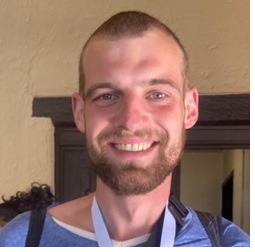
Paul Schmidt-Troschke is a German independent journalist, currently based in northern Mexico, specializing in international sports and their relationship to politics and society. He is the co-host of the “World Cup etc” and “World Sports etc” podcasts, available across all podcast platforms.