In Mexico, talking about great business fortunes means referring to stories that combine vision, constant work, and a precise understanding of the market. Many of the country’s millionaires didn’t inherit already established empires, but rather built them from modest projects, with a clear idea and enormous discipline. One of the most representative examples comes from the north of the country, where a family transformed corn flour into an engine of economic growth.
The story begins in Nuevo León, a region with an industrial tradition and an entrepreneurial spirit. There, a father and son identified an opportunity in an everyday product present in almost every home: the tortilla. What seemed like a small, local business ended up becoming a brand with an international presence, capable of competing in markets across the Americas, Europe, Asia, and Oceania.
Over the decades, this strategic bet resulted in a conglomerate that not only dominates the nixtamalized corn flour segment but also guaranteed financial stability for several generations of the family. Today, its flagship brand is synonymous with practicality, quality standardization, and global expansion.
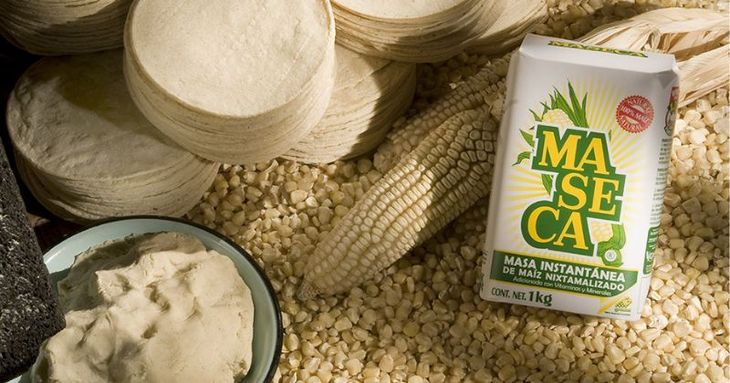
The company that gave rise to this empire is Gruma, founded in 1949 in Cerralvo, Nuevo León, by Roberto M. González Gutiérrez and his son, Roberto González Barrera. That same year, the first plant producing nixtamalized corn flour was established. The product was named Maseca, a combination of the words “masa” (dough) and “seca” (dry), referring to the dehydration process that preserves the corn’s properties.

Maseca became a practical solution: simply add water to obtain masa ready for making tortillas, sopes, tlacoyos, tostadas, enchiladas, and a wide variety of traditional dishes. This simplicity facilitated its adoption in millions of homes and small food businesses, accelerating its penetration of the national market.
International expansion was driven by Mexican migration to the United States and the opening of operations in Central America in the late 1980s, with a presence in countries such as Costa Rica, Honduras, El Salvador, Guatemala, and Nicaragua. Over time, the brand also established itself on other continents, expanding its distribution network.
The heart of the product is the nixtamalization process, an ancestral technique that consists of cooking corn with water and lime at controlled temperatures, letting it rest, and obtaining nixtamal, the base of the masa. This method improves the digestibility and nutritional value of the grain, in addition to providing the characteristic texture for making tortillas.
In Mexico, tortilla consumption still relies primarily on traditional nixtamal, which represents about 65% of production. The remaining 35% corresponds to industrial flours, where Maseca holds approximately 25% of the market. Other brands participate with smaller percentages, such as Minsa (8%), Harimasa (1%), Cargill (0.50%), Macsa (0.40%), and Blancas (0.20%). This leadership explains the company’s enormous economic influence within the food sector.
As with many large-scale companies, the brand has also faced controversies. In recent years, allegations arose regarding the presence of herbicide residues in some samples. The company responded that the levels detected were below the limits permitted by international organizations and that health authorities maintain constant oversight of product quality.
Beyond the debates, the Maseca case illustrates how a simple idea, supported by industrial innovation and strategic expansion, can transform into a business empire. The vision of that father and son from Nuevo León not only created a leading brand but also ensured the prosperity of an entire Mexican business dynasty.

Source: ambito