Since Donald Trump began his second presidential term, the United States has issued a total of 11 security alerts for Mexico, focusing on the states of Tamaulipas, Nuevo León, and Baja California as “hot spots,” according to security reports from the U.S. State Department’s Bureau of Consular Affairs.
According to security, geopolitics, and international relations experts, the reports paint a complex picture of insecurity in Mexico in the eyes of the United States, a country that no longer limits itself to the traditional “hot spots” of violence, but now also monitors social discontent against U.S. actions following the arrest of President Nicolás Maduro in Venezuela.
This situation takes on even greater significance considering the recent statements by President Donald Trump, who has asserted that the United States will attack drug cartels by land, and the words of U.S. Secretary of State Marco Rubio, who demanded “tangible results” from Mexican authorities in the fight against drug cartels.
However, Mayor Claudia Sheinbaum Pardo reported this Monday, January 12, that she had a “very good” telephone conversation with her US counterpart, after which she ruled out the possibility of US military intervention in Mexico to combat drug cartels.

The Northern Border: Main Areas of Danger for the US in Mexico
Since January 20, 2025, when Donald Trump’s second presidential term began, the first and most evident “red flag” of the security crisis in Mexico for the United States has been Tamaulipas, emerging as the area of greatest concern. With four travel alerts, the state is the focus of warnings ranging from high-impact crimes to risks to mobility.
The first U.S. travel alert was issued on January 27, 2026, and not only mentioned a Level 4 travel advisory, warning against travel to municipalities such as Reynosa, Río Bravo, Valle Hermoso, and San Fernando “due to crime (shootings) and kidnappings,” but also advised against “moving or touching improvised explosive devices.”
“Criminal organizations in this region are increasingly manufacturing and using IEDs (Improvised Explosive Devices). An IED destroyed an official vehicle belonging to the Mexican government (Conagua) on the Rio Bravo and injured its occupant on January 23. As a precautionary measure, U.S. government employees have been directed to avoid travel to Reynosa and Río Bravo and surrounding areas outside of daylight hours and to avoid unpaved roads in Tamaulipas,” the U.S. document states.
The second alert also warned of reports of extreme violence, including multiple shootings in key cities like Nuevo Laredo, and recommended actions such as “sheltering in place,” “monitoring local media for updates,” and “being aware of your surroundings.”
Although concentrated in Tamaulipas, the security situation for the United States extends to the neighboring state of Nuevo León, where an alert has been issued warning of recent highway robberies, such as Highway 85D, and the risk of disappearances on the Monterrey-Reynosa highway.
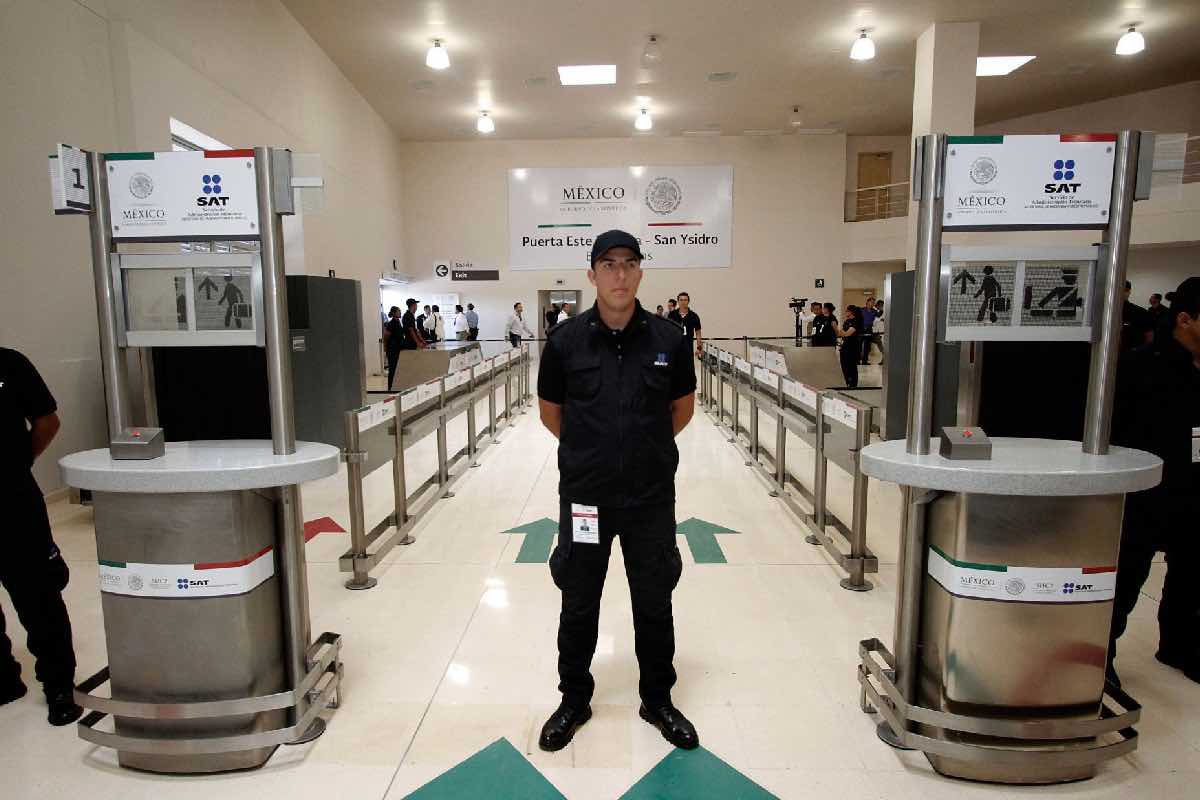
Thus, as a whole, the northeastern border region is the main “hotspot” of risk for traffic and trade by Americans within Mexico, according to the U.S.
For David Saucedo, a public security specialist, these alerts are strategic tools within an agenda where security is “secondary to the commercial interests of the United States.”
This is because their aim is to “curb the flow of American tourists to Mexico” in order to encourage capital to remain in the United States. The expert maintains that the underlying motive is to obtain concessions on issues such as the trade deficit, drug trafficking, and migration, noting that “it’s all part of an economic, commercial, financial, and migratory interest.”
In contrast, Arturo Santa Cruz, director of the Center for North American Studies at the University of Guadalajara (UDG), believes that these warnings have lost their effectiveness over time.
He states that “these types of alerts have become like church bells,” since “they haven’t impacted the tourism sector” or the number of Americans who decide to visit Mexico, even in the areas designated as “hot spots.”
Source: animalpolitico